Showing posts with label Peternakan. Show all posts

Thursday, October 4, 2012

Chinese GM Cows Make Human Breast Milk (Video)


Chinese scientists have genetically modified dairy cows to produce human breast milk, and hope to be selling it in supermarkets within three years.

The milk produced by the transgenic cows is identical to the human variety and has the same immune-boosting and antibacterial qualities as breast milk, scientists at China's Agricultural University in Beijing say.

The transgenic herd of 300 was bred by inserting human genes into cloned cow embryos which were then implanted into surrogate cows.

The technology was similar to that used to produce Dolly the sheep.

The milk is still undergoing safety tests but with government permission it will be sold to consumers as a more nutritious dairy drink than cow's milk.

Workers at the university's dairy farm have already tasted the milk, and say it is sweeter and stronger than the usual bovine variety.

"It's good," said worker Jiang Yao. "It's better for you because it's genetically modified."

The scientists have also produced animals that are resistant to mad cow disease, as well as beef cattle that are genetically modified to produce more nutritious meat.

The director of the research project, Professor Li Ning, says Western concerns about the ethics of genetic modification are misplaced.

"There are 1.5 billion people in the world who don't get enough to eat," he said. "It's our duty to develop science and technology, not to hold it back.

"We need to feed people first, before we consider ideals and convictions."

In contrast to Europe, China has eagerly embraced genetically modified food.

GM cooking oil, papayas, tomatoes and potatoes are already widely available.

Insect-resistant rice and corn modified to help pigs absorb more nutrients were both recently approved by the government.


Breast milk - from cows' udders
Video: GM Cows Produce Human Breast Milk
Enlarge


Source: News.sky

Ear-A-Round Headphone to Guide Cows Home to Mamma


Herding cows home will soon be very easy task thanks to the efforts put in by the U.S. Department of Agriculture and the Massachusetts Institute of Technology. They have teamed up together to come out with a very techno way to round up the herd and head them home. A solar-powered “Ear-A-Round” helmet is what they have come up with. An electronics device hooked to sound-transmitting stereo earphones containing a GPS unit has been bundled together. The entire contraption fits snugly around the ear, giving out commands to the cows. This way the farmer gets to control his herd from afar.

Source: Newlaunches

Russian Cow Barn Gets High Tech, Cows Get to Watch HDTV

By Lambert Varias


A loving and deep-pocketed farmer read somewhere that dairy cows that see green fields all the time are happier and produce more milk. So he bought a bunch of Samsung 40″ Series 7 LED TVs and had them installed in his cow barn, so now his cows can watch “a non-stop loop of world’s recognized green Swiss Alpine fields.”

Or can they? Can cows look up? And if so, can they look up for long periods of time? The farmer is now measuring the milk production of the bourgeois cows against the ones who have no TVs.

Source: Technabob

Cows Check in for Meals Using Electronic Ear Tags

By Ben Coxworth

Project leader Ollie Szyszka, with one of the electronically-tagged cows

With diseases such as Foot and Mouth, TB, and of course Mad Cow still presenting a danger to cattle, it's of the utmost importance that farmers monitor the health of their animals, and immediately proceed to isolate any that might be showing symptoms. If you have a herd of over 500 cows, however, keeping track of individuals can be rather tricky. That's why scientists at England's Newcastle University have developed electronic ears tags, that they're trying out on a herd of test cattle.

Each ear tag is equipped with an RFID (radio frequency identification) chip, that transmits a short-range signal. Antennas mounted on the feeding troughs will pick up that signal when the cow comes to feed, with a computer keeping track of the amount of time that elapses until the signal is lost when the cow leaves. In this way, the system can keep track of which cows are eating regularly, and that they're getting enough to eat when they do.

Electronic ears tags are being used to check on the well-being of cattle

If a cow isn't eating enough - which could indicate that it isn't feeling well - the system notifies the farmer, identifying which cow should be looked at.

The cattle also have pedometers attached to their ankles, which measure how much time the animals spend being active versus lying down - another indicator of their health.

Pedometers are being used to check how active cattle are

"Modern farming systems have minimized the contact between the animal and its keeper," said project co-leader Prof. Ilias Kyriazakis, "so we need to constantly look for ways to re-address the balance."

Source: Gizmag

Swiss Cows Send Texts to Announce They’re in Heat

Christian Oesch is testing a device that sends an SMS to his phone when a cow is sexually active.

By John Tagliabue

ZOLLIKOFEN, Switzerland — When Christian Oesch was a boy on his family’s hog farm, cellphones were a thing of the future. Now, Mr. Oesch tends a herd of dairy cattle and carries a smartphone wherever he goes. Occasionally he gets an SMS from one of his cows.

That is because Mr. Oesch, 60, who cares for a herd of 44 Red Holstein and Jersey dairy cows, is helping to test a device that implants sensors in cows to let farmers know when they are in heat. When that is the case, the device sends an SMS to the farmer’s phone. The Swiss do not settle for half measures: the SMS can be in any one of Switzerland’s three main languages — German, French and Italian — plus English or Spanish.

If there is anything to be learned from this project, which will bring the devices to market early next year, it is that Heidi’s world of goats — or cows — placidly grazing in Alpine meadows is gradually becoming the stuff of storybooks.

The electronic heat detector is the brainchild of several professors at a technical college in the nearby Swiss capital of Bern. It fills a market gap, they say, because dairy cows, under growing stress to produce larger quantities of milk, are showing fewer and fewer signs of heat. That makes it harder for Swiss farmers to use traditional visual inspections to know when to bring on the bull or, in about 80 percent of the cases these days, the artificial inseminator.

The sensor implanted in the genitals of Fiona or Bella (favorite names for Swiss cows) measures body heat, then transmits the result to a sensor affixed to the cow’s neck that measures body motion. (Cows in heat become restless.) “The results are combined, using algorithms, and if the cow is in heat an SMS is sent to the farmer,” said Claude Brielmann, a computer specialist who helped design the system. The detector on the cow’s neck is equipped with a SIM card so the farmer can pay for the calls.

“Our recognition rate is about 90 percent,” Mr. Brielmann said.

The device, known as a heat detector, raises concerns among animal rights advocates, not so much because of its intrusiveness in the private parts of the cow — its use involves inserting a thermometer with a tiny transmitter and antenna in the cow’s genitals — but because of what it says about the stressful lives of Swiss cows. It also prompts skepticism among dairy farmers, who are startled by its cost, which is expected to be at least $1,400 per unit.

“Will it bring anything financially?” asked Ulrich Tschanz, 76, who raised Red Holsteins in the neighboring town of Oberlindach, where the clanking of cow bells is everywhere, until he turned over his herd of 40 cows to his son some years ago. “Always keep an eye on your cows, keep an eye on them,” he added. “That’s the best.”

But experts say measures taken to increase milk production — adding proteins, minerals and vitamins to their feed— upset the cows’ metabolism, making the device increasingly necessary. “With greater productivity there is a drop in reproductive activity,” said Samuel Kohler, a veterinarian who is among the developers of the device and now serves on the board of the company, called Anemon, that hopes to sell it. “It happens fairly frequently that you miss the right moment.”

Few people anywhere are as sensitive to animal rights as the Swiss, who have some of the toughest animal rights laws in the world. A comprehensive law enacted four years ago, for instance, obliges dog owners to take a course on the proper treatment of their pet and requires that certain animals deemed social, like guinea pigs or canaries, have one or more companions in captivity. (Even the Swiss have their limits. In 2010, voters overwhelmingly rejected a proposed law that would have appointed free lawyers to represent animals in abuse cases.)

Daniel Auf Der Mauer for The New York Times 
Receiving a message on a smartphone

Hansuli Huber, the managing director of the Swiss animal rights agency Tierschutz, said the dignity of the cow was less of an issue with the new device. “There is a certain justification,” he said. Yet he added: “The real problem is the cows’ not showing signs of heat, and this is linked with the demands made on cows to produce ever larger quantities of milk.”

Moreover, he said, cows are also calving less frequently than in the past because of stress. “Now maybe they do so three times in their lifetime,” he said. “While 20 or 30 years ago it used to be perhaps seven times.”

Many Swiss accept this reasoning. “It’s a shame that it’s come to this,” said Harri Hofer, 54, a security specialist, as he did his shopping along Zollikofen’s main street.

With global milk prices slumping, productivity is crucial for Swiss cows, whose owners are feeling the financial pinch. According to the government’s Office for Agriculture in Bern, every year some 2 percent of farms like those around Zollikofen shut down, unable to compete with bigger, more efficient producers abroad.

Dr. Kohler said he did not expect significant opposition to the new device. “It’s not cruelty to animals,” he said. “The cows behave very normally. I don’t see a problem.”

Indeed, Mr. Oesch is very pleased with his results so far, despite some early problems. “The first attempts were not trouble free,” he said. “The problem was with the sensors. They were not sturdy enough.”

Occasionally, the device would send a false signal that a cow was in heat, he said. Other times, it failed to detect when one of the cows was in an amorous mood. This week, he said, he would begin testing newer, sturdier models.

Aside from the cow’s love life, mistakes have a negative impact on a farmer’s pocketbook. Missing the right moment can cost Mr. Oesch, who uses artificial insemination, as much as 300 Swiss francs, or about $320, in unused semen.

Even with such results, farmers like Mr. Tschanz reacted soberly, especially given the steep purchase price of the device.

“Cost is important,” said Martin Baumgartner, 33, who is the fourth generation in his family to tend cows here. Only about 20 of his herd of 100 are now milk cows, while the others are more profitable Simmental and Black Angus beef cows.

His neighbor Urs König, 48, who got out of the dairy business a few years ago to focus on hogs, was equally unromantic. “It’s a cost-benefit question,” he said.

Source: Nytimes 1 and Nytimes 2

Saturday, May 19, 2012

Berternak Cupang

hallo para pecinta binatang ,,,, kali ini saya mau share cara berternak ikan cupang nih ,,,,, udah banyak binatang yang pernah saya pelihara ,,, udah gak kehitung udah berapa jenis binatang, tapi menurut saya tetap ikan yang paling gampang dan mudah untuk di pelihara ,,,,,,nah kalau gitu langsung aja ya ,,, para penghobi ikan cupang yang  belum bisa dan ingin berternak ikan cupang mohon disimak baik-baik ya ,,,  oke ,, oke dong pastinya ,,,,,

hal yang harus disiapkan cukup ...
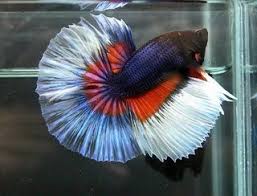
- indukan yang siap kawin
- tempat perkawinan
- tanaman air

 cupang pejantan yang siap kawin ditandai dengan munculnya busa atau bahasa jawanya umpruk di permukaan air....
   
kemudian siapkan cupang  betina yang tidak hanya siap kawin saja tapi juga siap bertelur, ikan cupang betina yang siap bertelur biasanya perutnya besar tapi bukan karena kekenyangan ....
     

sebelumnya yang masih belum tahu bahwa ikan cupang terdiri dari beberapa varian, namun perkawinan silang juga boleh dilakukan untuk menghasilkan varian baru, tapi saya lebih suka mengawinkan sesama varian cupang saja untuk mempertahankan kualitas ,,,

setelah pejantan dan betina dipilih  siapkan wadah tempat perkawian/bertelur dengan ukuran min 50x70cm itu menurut saya dimaksudkan untuk mengihindari perkelahian sehingga jika salah satu takut bisa berusaha untuk menghindari, oya beri sedikit tanaman air untuk tempat sembunyi ikan cupang yang takut dan juga sebagi tempat telur cupang ,,,

 kemudian isi air 15-20cm dari dasar dimaksudkan agar ketika telur cupang telah menetas anak cupang yang baru netas tidak terlalu mengeluarkan tenaga untuk mengambil nafas di permukaan ,,,
Setelah tempat perkawinan/pemijahan telah siap, masukan pejantan dan betinanya ,,, sebelumnya ikan harus dikenalkan dengan mendekatkan wadah kedua ikan tersebut, agar ketika disatukan jiwa bertarungnya sedikit hilang ,,, jangan kaget dengan reaksi kedua ikan kesayangan anda biyasanya akan saling kejar dan gigit tapi jangan khawatir karena hanya beberapa saat saja, jika salah satu belum siap kawin jangan disatukan ,,, yang sebelumnya saya sudah tekankan karena mungkin ini akan gagal dan salah satunya akan mati. 

setelah disatukan ikan juga seperti manusia butuh pendekatan dulu, biasanya waktu kawin terjadi 1 atau 2 hari ,,,, setelah disatukan ,,,  perkawinan terjadi di siang / malam hari ,,,, tapi lebih sering malam karena gelap mungkin  lebih asik ,,, nah supaya perkawinan terjadinya siang tutup wadah/.kolam sebagian ,,, ketika ikan sedang melakukan perkawinan jangan sring diintip ya ..... tapi jangan dibiarkan .... 10mnt sekali dicek agar kita tahu sudah selesai apa belumproses pemijahannya, sehinnga telur tidak habis dimakan betina  

setelah sekitar 1 jam biasanya induk betina telah mengeluarkan semua telur yang ada dalam perutnya ,,,, dan telur akan terkumpul di permukaan air bercampur dengan busa/sarang ikan cupang tersebut ,,,, beberapa telur pasti ada yang jatuh kedasar kolam ,,, jangan di ambil biarkan saja karena si jantan akan memposisikan/membawa kembali telur kesarangnya menggunakan mulutnya, tenang sijantan tidak akan memakannya ,,,,

setelah dirasa sibetina telah mengeluarkan semua telurnya ,,,, betina dengan hati-hati harus dipisahkan/dipindahkan karena betina akan memakan habis semua telurnya ,,, hati-hati jangan buat gelombang air, nanti telurnya akan jatuh ke bawah kasian si jantannya ,,,, harus mengembalikan ke sarangnya lagi ,,, biarkan sijantan dalam wadah sampai anak ikan cupang tersebut sudah bisa berenag ,,,,,, 

biyasanya dalam 1 s/d 2 hari ratusan telur-telur yang berwarna putih itu akan menetas ,,, dan pastinya si jantan akan lebih sibuk ,,,, beri sedikit makan tapi biasanya gak mau makan ,,,

pisahkan jantan jika anakan sudah sedikit bisa berenang ,,,, jangan lupa beri makan sijantan atas perjuangannya ,,,,
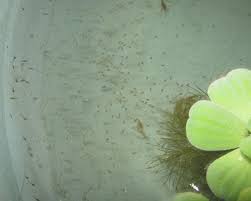
nah terus anda pasti berpikir apa makannya ,,, karna ukuran anakan amat sangat kecil tidak mungkin diberi makan cacing, nah makan anakan ikan itu adalah telur tapi biyasanya air akan berbau tidak enak, selain telur juga bisa dengan air kubis ,,,, cara buatnya gampang banget cukup siapkan wadah dan sedikit kubis jika yang dikawinkan sedikit, kemudian rendam dalam air sampai busuk ,,,, nah air yang mengandung zooplankton itulah makanan anakan, campurkan secukupnya pada wadah anakan ikan ,,, secukupnya saja ,,, setelah sampai 3bln anakan akan siap untuk makan cacing sutra ,,,, lalu pasti anda juga kan berfikir butuh berapa wadah untuk anakan cupang-cupangku agar tidak saling bertarung, tenang saja anakan tidak akan bertarung ,,,, namun suatu saat anda akan membutuhkannya, biarkan tetap disatukansampai waktunya ...

nah dibawah ini adalah beberapa jenis ikan cupang yang pernah saya pelihara dari ternak sendiri ,,,,


nah gampang bangetkan caranya silahkan mencoba dirumah, semoga berhasil dan menebalkan kantong anda
sumber gambar : copas